OPS.
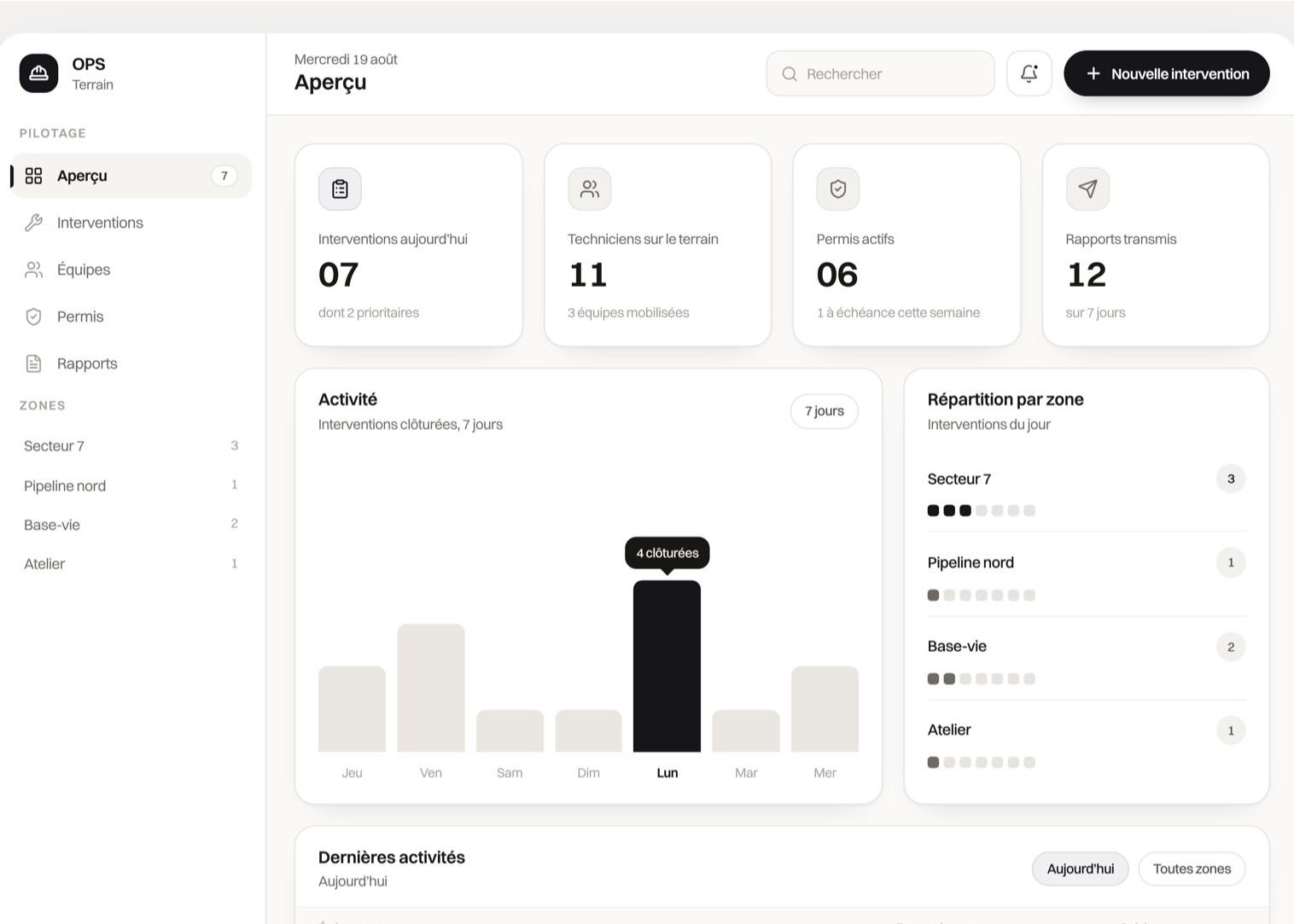
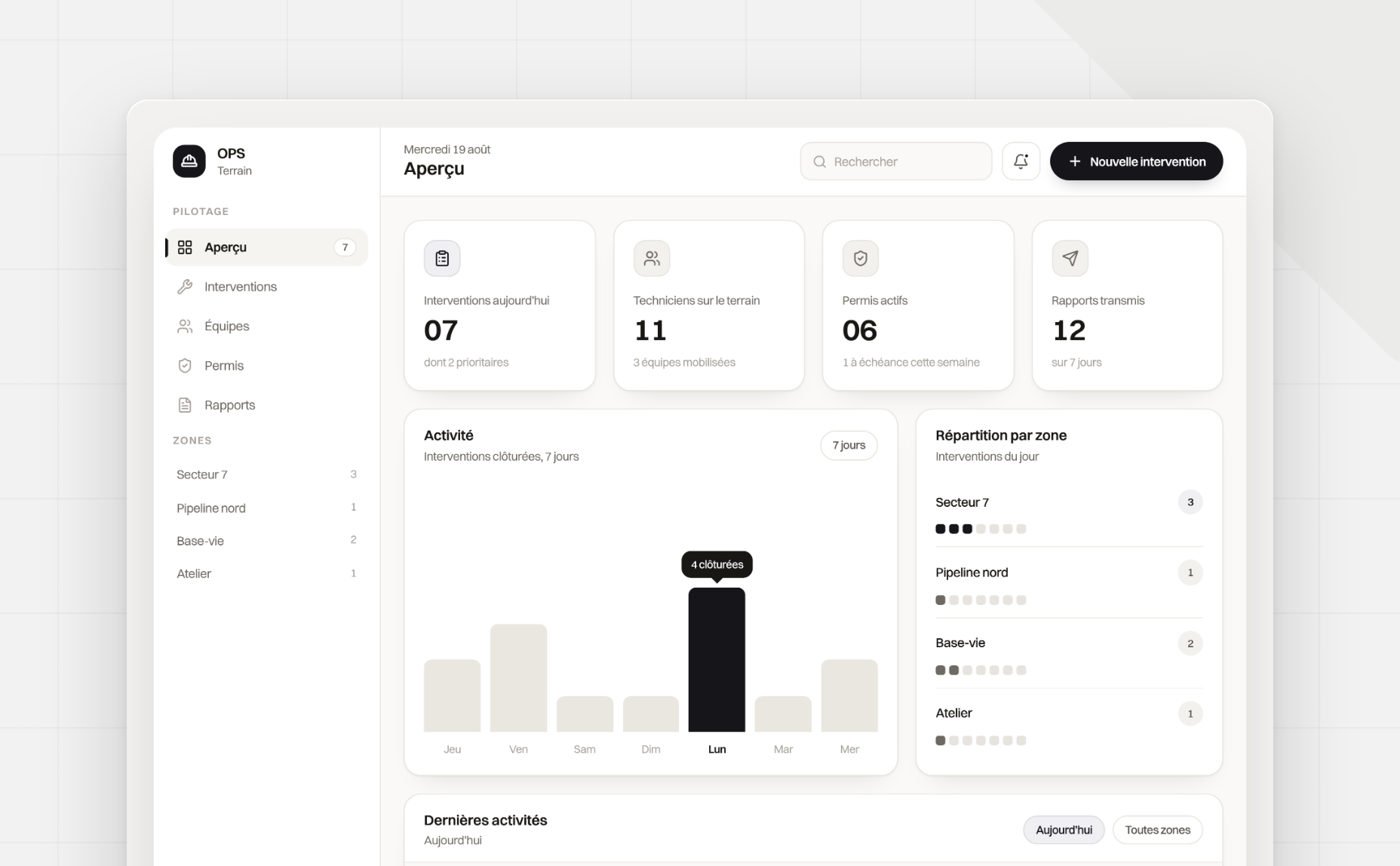
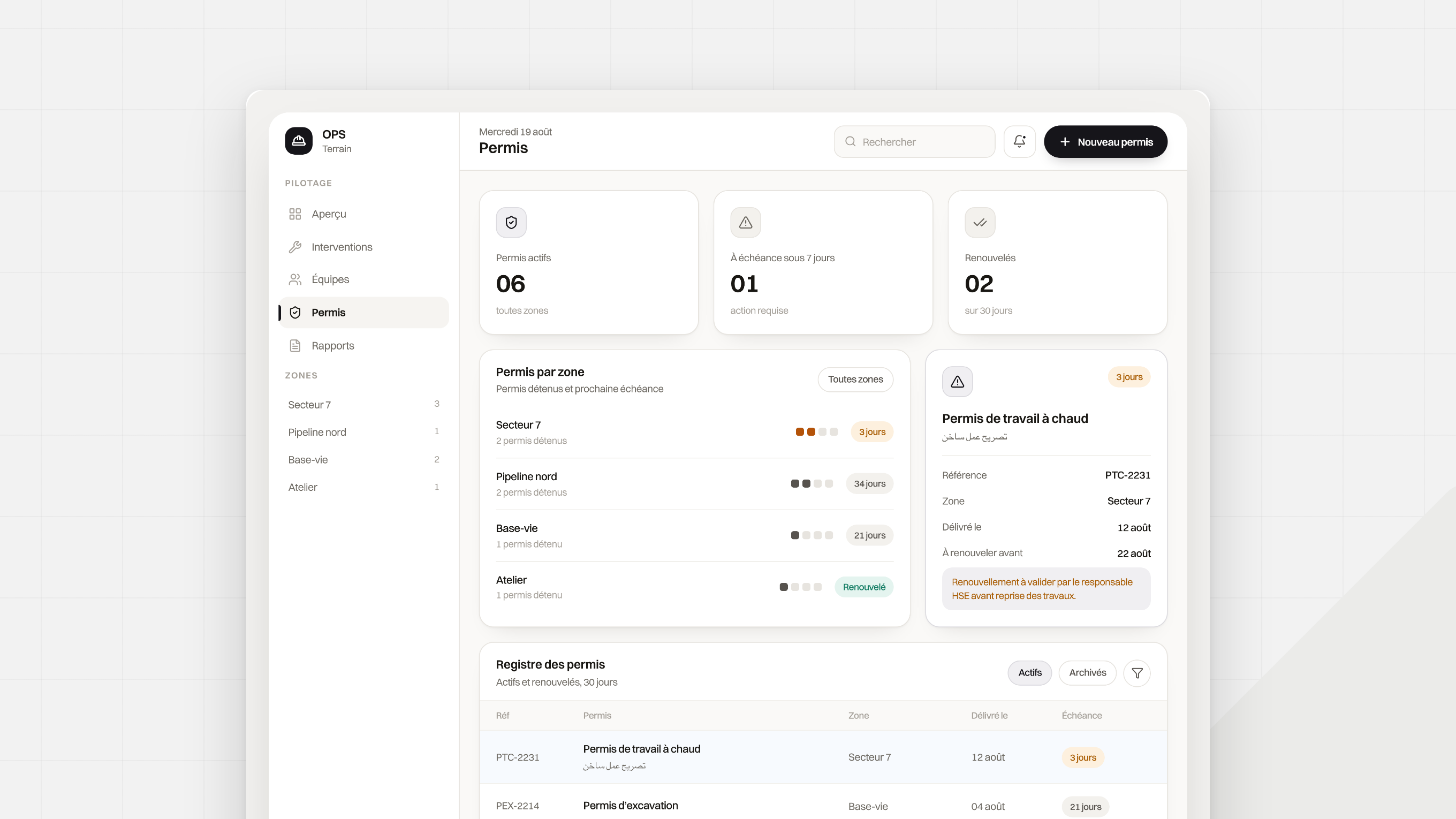
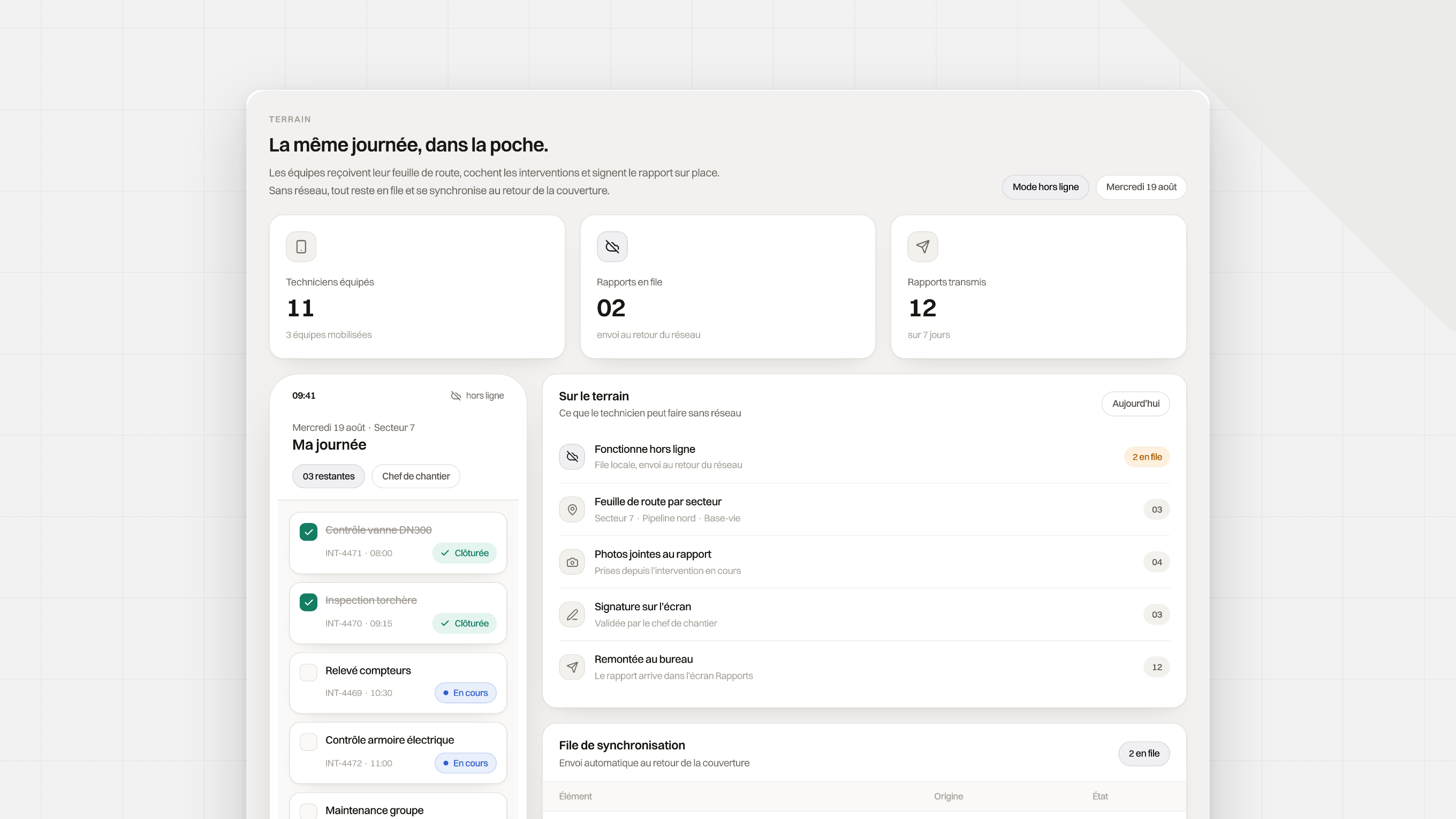
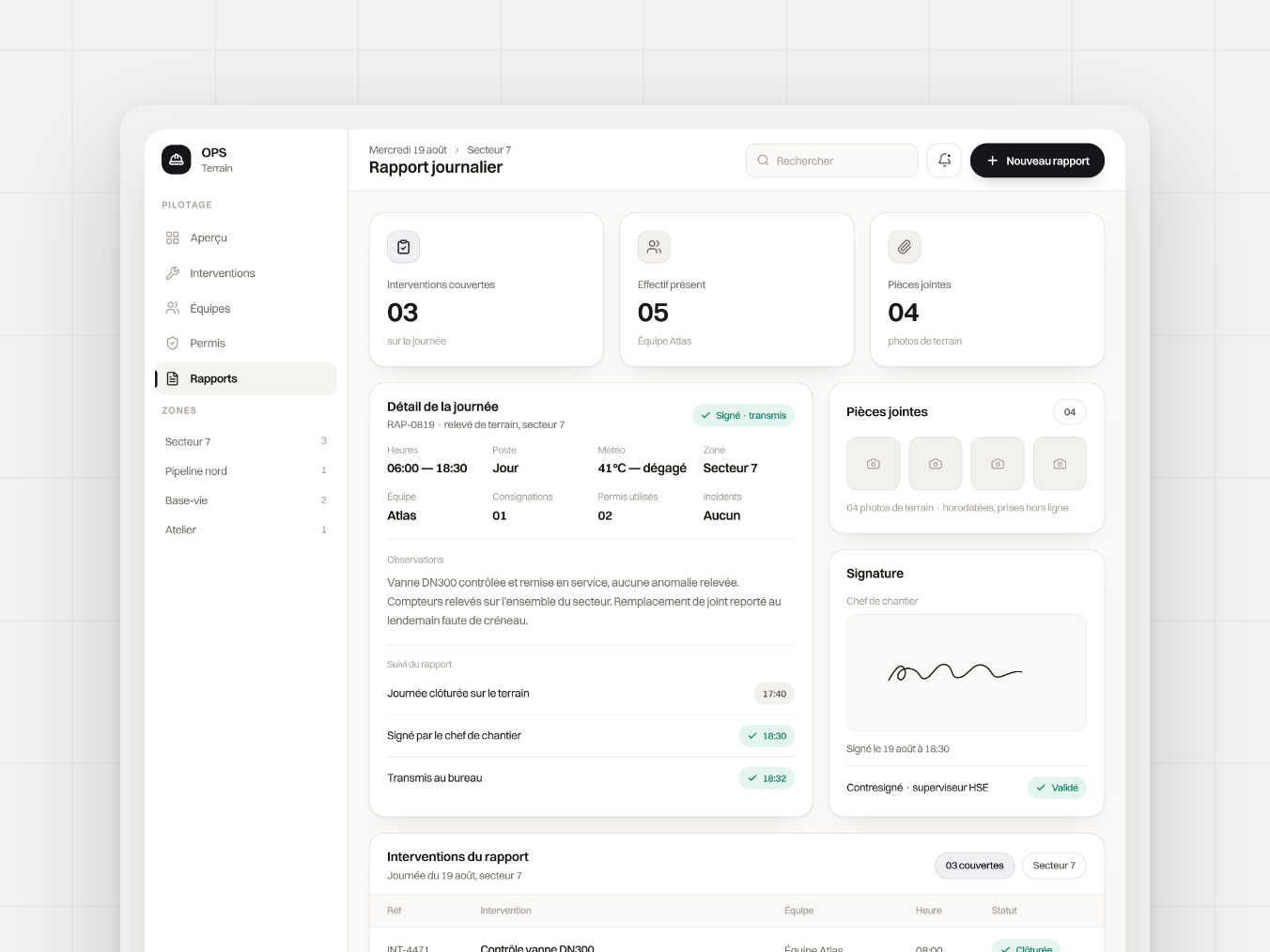
A field operations system for crews working sites: interventions, permits, teams and the daily report in one register, built to work where there is no signal.
YEAR
2026
CATEGORY
Field operations
STATUS
PRODUCT IN DEVELOPMENT
OWNER
In-house product
Interventions raised on paper, permits tracked in a spreadsheet, day sheets chased by phone — and no signal on site to do any of it live. The office and the field end up reading two different versions of the same day, and neither can be sure which one is right.
START A CALIBRATIONSCOPE
What a site gets.
Offline
The day is carried on the device
Self-hosted
One server, one database
FR · AR
Permits in French and Arabic
Before the first call.
One program across five capabilities: agentic AI and intelligent automation, custom software development, enterprise systems and integration, digital product and experience design, and brand strategy and identity. You brief once. The same team carries it from the operating model through to the system in use, so there is no gap between the people who designed it and the people who built it.
Calibration, then Build, then Partnership. Calibration establishes what is worth changing and produces a written plan you keep whether or not you continue. Build runs design, engineering, automation and implementation as one program in controlled phases. Partnership is support and adaptation after launch.
Deployment is designed to keep operational data inside the organization that owns it. OPS, the field operations product being developed in-house, is built to be self-hosted: one server, one database per organization. The same principle applies to client systems — data residency and access are agreed during Calibration and written into the scope, not decided afterwards.
Automation drafts, routes, checks and proposes. Where a decision carries weight — money, safety, a contractual commitment — the system presents it to a person together with the trail that produced it, and that person decides. Which decisions those are is agreed explicitly in system design.
Integration is one of the five capabilities rather than an afterthought. The work consolidates information across departments, modernizes legacy workflows and establishes one reliable source of operational data. What connects to what, and in which direction, is mapped during Calibration before anything is built.
You do. The system, the source, the documentation and the operational knowledge transfer to your organization. Partnership is a service we provide afterwards because organizations change, not a dependency engineered into the handover.
 Recalibre®
Show us the process that keeps breaking.
Describe the operational problem in your own words. We will tell you whether it is a strategy problem, a systems problem or a design problem — and what a Calibration would cover.
 YOU
YOU